



Quick summary
- On the morning of March 20, 1995, Tokyo was waking up to its usual routine, unaware that its daily commute was about to turn into one of the most t…
NavigationIn this article
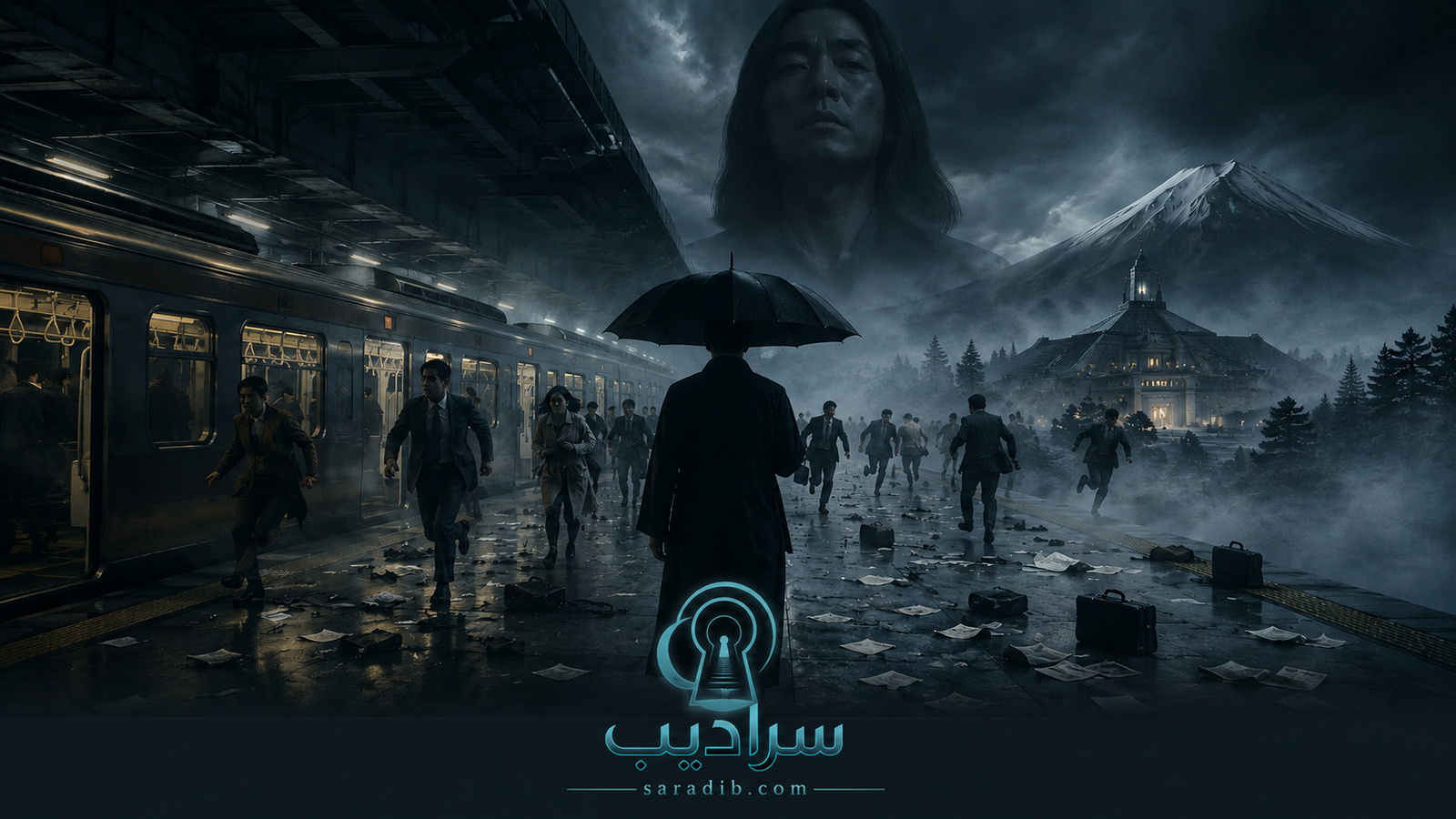
On the morning of March 20, 1995, Tokyo was waking up to its usual routine of trains, bustling employees, and students heading to their workplaces and schools. Everything seemed normal, and no one expected that the daily subway commute would turn into one of the most terrifying incidents in modern Japanese history.
A number of men entered various train cars carrying bags containing a liquid substance. They placed the bags on the train floors, punctured them, and quickly exited. Minutes later, passengers began to feel something strange. A sharp pain spread in their eyes, some began coughing and choking, while others collapsed to the floor, unable to move.
The passengers did not know they had been exposed to sarin gas, a highly toxic substance that affects the nervous system. The attack was not random or carried out by a lone individual; it was an organized operation executed by members of a mysterious group known as Aum Shinrikyo.
The attack resulted in the deaths of several people and left thousands injured to varying degrees, with some survivors suffering from health and psychological effects for many years. But the story did not begin in the subway cars, nor did it start with murder or toxic gases. It began years earlier, inside a small center for yoga and meditation.
The group's founder was a man named Chizuo Matsumoto, who later changed his name to Shoko Asahara. Born in 1955, he suffered from severe visual impairment. In the 1980s, he began offering yoga and meditation classes, presenting himself as a spiritual teacher who possessed supernatural abilities and knowledge that others lacked.
At that time, Japan was experiencing economic progress and intense competition, but many young people felt lonely, empty, and devoid of meaning. Asahara exploited this feeling, promising his followers inner peace and access to higher levels of consciousness.
He blended ideas from Buddhism, Hinduism, and Christianity, adding his own beliefs about the end of the world and the coming war. Over time, he no longer appeared merely as a meditation teacher; he began to present himself as a chosen individual capable of saving humanity.
Strangely, the group did not only attract simple-minded people; doctors, engineers, lawyers, scientists, and graduates from prestigious universities joined as well. This is what made its story even more astonishing. How could educated people believe claims of such magnitude?
The answer lay in the way the group treated its members. It encouraged them to distance themselves from their families, sever their ties with the outside world, and relinquish their property and money to the organization. Members lived inside closed compounds, where they heard nothing but the leader's words and instructions.
Over time, doubting Asahara became a form of betrayal, and his obedience became absolute and unquestionable. Followers purchased products associated with him, participated in grueling training, and used devices the group claimed would help them unify their thoughts and brain waves with the leader's mind.
Asahara began to speak constantly about a major world war that would wipe out most of humanity. He insisted that only his followers would survive it. With the repetition of this idea, the outside world became, in the eyes of the group members, a corrupt and hostile place, and anyone who opposed them became a threat that had to be eliminated.
In 1989, a Japanese lawyer named Tsutsumi Sakamoto stood against the group and helped some families who were trying to retrieve their children from it. This was unacceptable to the leaders of Aum Shinrikyo. Shortly thereafter, the lawyer disappeared with his wife and infant child; it was later revealed that they had been murdered by people linked to the group.
That crime was a clear sign that the organization was no longer just a strange spiritual group, but had transformed into a violent entity prepared to kill to protect itself.
Asahara established a system within the group that resembled a government, granting his followers positions with names like "Ministry of Science" and "Ministry of Health." These names were not merely symbolic, as each department played a real role within the organization.
The group's leaders leveraged the expertise of the doctors, scientists, and engineers who had joined them, establishing secret laboratories, purchasing equipment and chemicals, and beginning attempts to produce weapons capable of killing large numbers of people.
Inside their compounds near Mount Fuji, ideas of the apocalypse turned into real and dangerous projects. Some group members worked on producing sarin gas and other toxic substances. They also attempted to develop biological weapons, although many of those attempts were unsuccessful.
In June 1994, the group used sarin gas in the Japanese city of Matsumoto. The target was an area where judges presiding over a case that could affect the organization's interests resided. The attack killed several people and injured others, but authorities were unable at the time to definitively link the crime to the group.
That attack was a trial run for what would happen later in Tokyo.
By the beginning of 1995, the police began closing in on Aum Shinrikyo, and the group's leaders feared raids on their headquarters and the exposure of their secrets. Therefore, they made the decision to carry out a massive attack within the capital's subway network.
They chose rush hour, when trains were packed with employees and students. They targeted lines passing near important government institutions, then distributed the perpetrators across a number of trains.
Each person entered carrying bags containing sarin, placed them on the floor of the carriage, punctured them, and left. The gas did not spread with maximum possible efficiency, which perhaps contributed to reducing the number of casualties, but it still caused a major catastrophe.
Stations turned into scenes of chaos. The injured were stumbling or collapsing, while others tried to help those around them without knowing the nature of the toxic substance. Some subway workers and paramedics were poisoned while trying to rescue passengers.
Within hours, Japan realized it was facing a chemical attack carried out by an organization from within the country.
After the incident, police raided the group's headquarters in various regions. They found laboratories, equipment, chemicals, and evidence that revealed the scale of the danger the organization posed.
Asahara hid inside one of the group's buildings but was arrested in May 1995. During the investigations and trials, a series of crimes linked to Aum Shinrikyo emerged, including murder, kidnapping, torture, and chemical experiments.
The trials lasted for many years, and death sentences were issued for Asahara and a number of his senior followers. In 2018, the sentences were carried out on several of them.
However, the end of the trials did not end the effects of the crime. Many survivors continued to suffer from vision, memory, and nervous system problems, in addition to anxiety, fear, and psychological disorders. The families of the victims also continued to carry the pain of the incident long after it occurred.
What is most terrifying about the story of Aum Shinrikyo is not just its ability to produce a lethal substance or carry out an attack within a major city, but its ability to control the minds of educated people and turn them into tools that carry out the leader's orders.
Education alone is not always enough to protect a person from psychological manipulation. Asahara exploited his followers' need for belonging and reassurance, providing them with ready-made answers about life, death, and the future. He then convinced them that the world was an enemy and that he was the only one capable of saving them.
The group did not turn into a murderous organization in a single day. It started with a promise of inner peace, then turned into obedience, then isolation, then fear, and finally, the justification of violence.
This is why the story of Aum Shinrikyo remains one of the most dangerous examples of how a spiritual group can transform into an extremist organization. The story began with yoga and meditation sessions and ended in subway cars full of passengers who were just trying to get to work on an ordinary morning.
Have a thought or question about this article?
Continue the conversation in the community and share your ideas with readers and writers.

Comments 0
Share your thoughts respectfully. Abusive or disruptive comments may be hidden.